
Building Brave Kids: The Unique Role of Dads in Parenting
February 27, 2025

On the weekend, we enjoyed our first beach day as a family of four. Once we found our spot on the sand, my wife looked after our newborn, while I ran after our daughter as she bee-lined straight for the water.
Squish had been looking forward to the waves for days. She might only be 19 months old, but she remembered the last time we were at the beach and has decided it’s one of her favourite places in the world.
This summer, playing in the waves together has become a special dad-daughter activity for us. I love to surf, and I plan to teach Squish how to ride waves when she’s old enough. I’m also much more comfortable than my wife with Squish’s risk-taking in the water.
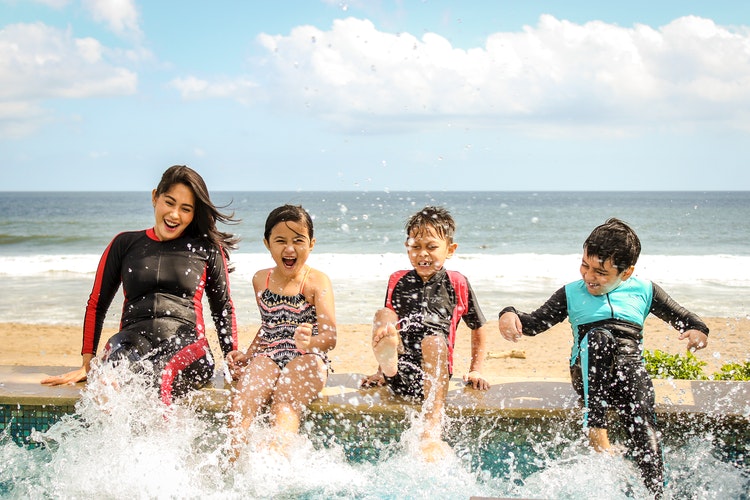
On Saturday, we jumped and splashed, spun and dove, laughed and bonded. Whatever I did to entertain my daughter — whether throwing her up in the air, twirling her around in the water or walking her chest-deep through the shallows, her response was always the same: “More!”
Building Independence and Resilience
Our weekend foray to the coast was a reminder of a theme I have touched on before but bears repeating: while mothers are wired to nurture, fathers have a natural parenting style that prepares children to face the world.
Fathers play a unique and indispensable role in their children’s development, encouraging them to explore, take risks, and build resilience.
Research compiled by the American Institute for Boys and Men (AIBM) found that “fathers tend to be more involved in preparing children to deal with life” compared to mothers, who are generally “more nurturing in their relationships with children.”
It goes without saying that neither role is more or less important — and that one complements the other.
One of the key ways fathers shape their children is through play. Studies show that dads spend a larger percentage of their parenting time engaged in play, often favouring more physically active, rough-and-tumble interactions, like me with Squish at the beach.
While some may dismiss dads’ playful approach as less valuable than structured learning, the research says we shouldn’t be so dismissive.
According to AIBM, play is critical for a child’s emotional regulation, social development, and motor skills. Squish’s constant cries of “More!” weren’t just a reflection of her joy — they were part of a deeper process of learning how to navigate excitement, movement, and small risks in a safe environment.
Taking Courage
Another key role of fathers is teaching and challenging their children. As one major review of fatherhood research found:
“Fathers play a particularly important role in the development of children’s openness to the outside world and their autonomy… enabling children to learn to be brave in unfamiliar situations and to stand up for themselves.”
At the beach, this looked like walking Squish out into deeper water than she was used to, letting her feel the push and pull of the waves, and encouraging her to trust me as we navigated the surf together. These moments — equal parts thrilling and educational — build a foundation of courage that will serve her well in years to come.
In most households, mothers do the lion’s share of parenting, and they deserve the lion’s share of praise for their efforts and love.
All that being said, fathers aren’t just a sidekick parent. They don’t just “help” raise children; they actively shape them.
Our parenting style is different from mothers, and that difference is a gift. The way we play, challenge, and model behaviour helps prepare our children not just to be loved, but to be strong, capable, and ready to take on the world.
Just ask my daughter.
___
Image courtesy of Pexels.

Related News
The hotel was already booked and paid for. No refunds. And. No. Internet. This holiday was going to be like a digital detox of the most excruciating kind.
Annette Spurr

Gordon Dalbey is a well-known writer and leader in the men’s movement. Dalbey is not travelling as much as he used to, but his legacy of wisdom lives on. His first book, Healing the Masculine Soul released in 1988 became a classic in the worldwide men’s movement, much like the poet, Robert Bly’s ground-breaking book, ‘Iron John’ which was released two years later in 1990. Some time ago a good friend ...
Warwick Marsh
News
Dads4Kids News is for writers to share insights, stories, the latest research and news to encourage dads and their families.
Most Read
The opinions of our writers are not necessarily the opinion of Dads4Kids. Please do your own research and come to your own conclusions. We welcome feedback and if you would like to submit an article to Dads4Kids, please contact the editor at info@dads4kids.org.au