Surviving Separation
March 17, 2026

A book review of Surviving Separation: Understanding Family Law Without Confusion (released in January 2025) by Graham McFarland.
Separation is rarely “just” a legal process. It’s grief, fear, logistics, money, identity, and (for parents) a deep anxiety about your relationship with your kids. Graham McFarland’s Surviving Separation is written for people inside that storm, especially those who feel overwhelmed by family-law jargon and the sheer volume of high-stakes decisions.
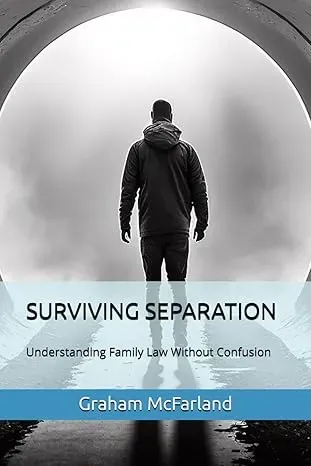 This is a practical, Australia-focused guide that aims to turn confusion into a step-by-step roadmap. It covers the emotional and mental foundations first, then moves into the mechanics of family law and the common decision points people face.
It’s also clearly informed by McFarland’s personal history of separation and his later work as a family-law advocate and community organiser.
A lot of separation books are either technical legal manuals, emotional support narratives, or generic “life reset” advice. McFarland tries to integrate all three, without pretending separation is tidy. His differentiator is credibility-by-proximity: lived experience, years of advocacy, and a “translate the system into plain English” approach.
Two other distinctive notes:
1. He frames the goal as regaining agency (“empowering yourself through knowledge” and action steps), not just “getting through court”.
2. He explicitly positions the stance as non-gendered and non-agenda, centred on children having both parents where possible, whether or not every reader agrees with how that plays out in practice.
Strengths
– Highly structured and readable: The topics in this book map closely to the real sequence of questions that people ask when life blows up.
– Practical coverage of “sticking points”: child support timing, property division, relocation, DV issues, and navigating court pathways.
– Bridges emotional and legal reality: It doesn’t treat people like robots making rational choices under stress.
Weaknesses
– It can’t replace personalised legal advice. Family law turns on facts, jurisdiction, and changing legislation; so, readers should treat it as orientation and preparation, not a substitute for counsel.
– McFarland’s advocacy voice may not suit everyone. The author’s experience and community work shape the lens; some readers will find that validating, others may want more neutral/legalistic framing.
– Australia-specific: Valuable if you’re in Australia; less directly applicable elsewhere without translation to local law and procedure.
Overall assessment
If you (or someone you care about) are entering separation and need clarity, sequencing, and psychological steadiness, then Surviving Separation is a solid, grounded companion. It’s at its best as a “first map”: helping you ask better questions, avoiding avoidable mistakes, and keeping your focus on what matters, especially the wellbeing of children and the long game of rebuilding a stable life.
___
Image courtesy of Adobe.

Related News

Encouraging your kids about good behaviour is one of the most effective ways to train, or disciple, your children.
Nathaniel Marsh

Why do some dads obsess over sports errors their kids make? Few will ever be pro. No matter which team wins or loses, we should be rooting for all these kids to post great numbers in the character stats. Because I guarantee the boy who does well in this will likely succeed in life.
Guest Writer
News
Dads4Kids News is for writers to share insights, stories, the latest research and news to encourage dads and their families.
Most Read
The opinions of our writers are not necessarily the opinion of Dads4Kids. Please do your own research and come to your own conclusions. We welcome feedback and if you would like to submit an article to Dads4Kids, please contact the editor at info@dads4kids.org.au