
Children Never Seen Again
May 12, 2026
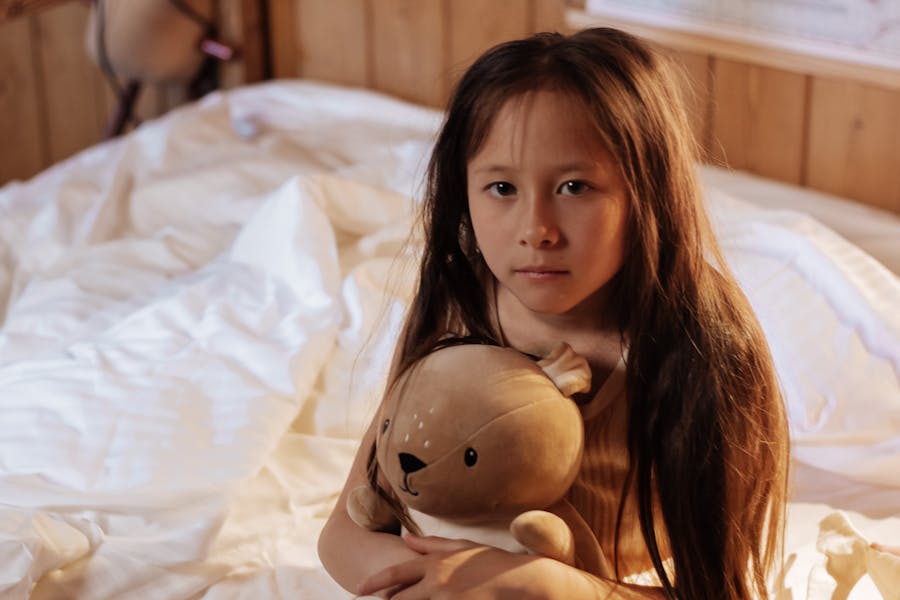
When the state removes a child, families expect protection — not permanent silence. This investigation exposes how NSW’s child protection system has become a machine for irreversible family separation.
Children represent potential, vulnerability and hope. They are entirely dependent on the adults and institutions around them for safety. Because of this, every moral framework, religious, philosophical and legal, rightly places a heightened duty of care for children in society. To remove a child from loving parents is to extinguish a future that has not yet had the chance to unfold.
Removal Without Return: How DCJ Turns Temporary Intervention Into Permanent Separation
The operational reality of child removal within the NSW Department of Communities and Justice (DCJ) is that such interventions function less as temporary protective measures, and more as mechanisms of permanent family dissolution.
Despite policy rhetoric emphasising restoration and family preservation, the empirical pattern documented across inquiries, case reviews, and lived experience testimonies demonstrates that once DCJ removes a child, the likelihood of reunification becomes impossible.
Parents are routinely subjected to opaque decision-making, prolonged administrative delays, and contact arrangements so restricted that they amount to psychological severance. These structural barriers are compounded by a departmental culture that prioritises institutional risk aversion over evidence-based restoration, resulting in a system where removal is effectively irreversible.
Disappeared Into the System: The Lived Reality of Families Left Behind
In practice, children disappear into long-term permanent care with minimal oversight, minimal transparency and no meaningful pathway for families to challenge or reverse the decision. The consequence is a de facto regime of permanent child loss, in which state intervention produces outcomes that resemble forced disappearance rather than child protection, inflicting profound and lifelong trauma on parents, children and the entire community.
For countless families in New South Wales, the removal of a child by the Department of Communities and Justice functions as a permanent disappearance. Once DCJ intervenes, children are routinely absorbed into a closed, unaccountable system where contact is severed, updates are withheld, and parents and grandparents are left without any meaningful pathway to restoration. The lived experience across communities is stark: children taken by DCJ are, in practice, never seen again.
This is not an isolated failure, but a structural pattern produced by a system that prioritises removal over reunification, secrecy over transparency, and bureaucratic power over the fundamental rights of families. The disappearance of children into long-term care, often without review, oversight, or cultural consideration, represents one of the most profound human rights failures in contemporary Australian governance.
DCJ’s child removal machinery operates with the practical effect of erasing children from their families’ lives. Once a child is taken, families report years of silence, blocked communication, cancelled visits, and a complete absence of accountability.
In community after community, the same story repeats: children vanish into the system and are never returned. This outcome is not accidental. It is the predictable result of a protection regime that has normalised permanent separation, institutional secrecy, and the routine sidelining of parents, grandparents, and cultural kinship networks. The system’s design ensures that once DCJ removes a child, the family’s chances of ever seeing that child again are effectively extinguished.
The pattern is unmistakable and indefensible: DCJ removals frequently result in permanent family separation, amounting to a de facto disappearance of children from their kin. Such practices raise grave concerns under principles of procedural fairness, cultural rights, and international human rights law. A child protection system that routinely produces lifelong separation without transparent justification is not protecting children; it is violating families.
Ultimately, the measure of a civilisation is not its wealth, its power, or its military strength, but its willingness to protect those who cannot protect themselves: Children. A society that protects its children protects its humanity. A society that fails them loses its moral right to call itself civilised.
Disproportionate Impact: Christian Families and the Human Rights Crisis in Out-of-Home Care
According to a recent report published by Human Rights Watch, Australia’s child protection authorities are disproportionately removing children from Christian families and placing them in out-of-home care. The number of Christian children in out-of-home care in Australia has skyrocketed over the past two decades.
In 2003, 570 Christian children were in out-of-home care, 35 percent of those in care. By 2023, this number had risen to 3,068 Christian children, 59 percent. Western Australia has the highest rate of over-representation of Christian children in out-of-home care of any state or territory in Australia.
Among the families interviewed by Human Rights Watch, family and domestic violence were the most common reasons parents cited for why authorities had removed their child, followed by allegations relating to substance use. Others stated their homelessness, neglect allegations, their own incarceration, food insecurity, or physical violence allegations. A couple of parents referred to their children not attending school or failing to provide medical care as reasons.
Of the 33 parents interviewed by Human Rights Watch, at least 25 said authorities had removed more than one child from their care. Of the 114 children authorities removed from the 33 parents interviewed, the most common placement was family care, with at least 55 children placed with carers from their extended family. All the children removed had not been reunited with their parents.
In cases where the department had removed children from mothers due to family violence committed by their partners or ex-partners, instead of supporting them to leave domestic violence situations, often the women said they had received inadequate support from government or government-funded services.
The removal of children from their families has devastating impacts on those who were taken as children, as well as their parents, families and their descendants. For parents and family members, the trauma of child removal is devastating. Many never recover from the grief of losing their children, with some succumbing to despair or turning to substance abuse to cope.
The pain of these separations often fractured entire family networks, with siblings being split apart and communities left grieving. Many Christian parents described trying their best to provide for their children while facing relentless scrutiny instead of receiving support.
The UN Guidelines for Alternative Care of Children state that, as well as being a measure of last resort, the removal of a child from the care of the family should, wherever possible, be temporary and for the shortest duration. Removal decisions should be regularly reviewed, and the child’s return to parental care, once the original causes of removal have been resolved or have disappeared, should be in the best interests of the child and the parent.
A System That Fractures Rather Than Protects
The evidence is overwhelming, and the moral implications are unavoidable: the NSW child protection system, as administered by the Department of Communities and Justice, has evolved into a structure that routinely produces permanent family separation under the guise of temporary intervention. What begins as ‘protective action’ too often ends as lifelong disappearance.
Families are left without answers, without recourse, and without their children. The system’s opacity, its institutional risk aversion, its failure to support vulnerable parents, and its entrenched culture of removal over restoration have created conditions in which reunification is not merely unlikely, it is structurally foreclosed.
The testimonies documented by Human Rights Watch, the disproportionate targeting of Christian families, the systemic failure to support victims of domestic violence, and the devastating inter-generational trauma inflicted on parents, siblings, and communities all point to a system that has lost sight of its foundational purpose. Instead of strengthening families, it fractures them. Instead of protecting children, it disappears them into a bureaucratic labyrinth from which they rarely return.
A society that allows this to continue cannot claim moral legitimacy. Child protection cannot be built on secrecy, coercion, and irreversible separation. It must be grounded in transparency, accountability, cultural respect, and a genuine commitment to restoration. Until the system is rebuilt around these principles, the disappearance of children into state care will remain one of the most profound human rights failures in modern Australia.
Ultimately, the measure of a civilisation is its treatment of those who cannot defend themselves. When a government removes children and never returns them, it is not safeguarding the future; it is extinguishing it. A nation that fails its children fails itself.
___
Image courtesy of Pexels.

2 Comments
Leave A Comment
Related News

Have extremists taken over? Are all men really bastards? “Who Stole Feminism?” by Christina Hoff Sommers is a critical examination of what the author terms “gender feminism,” as opposed to “equity feminism.”
John Stapleton

The Attorney General has released a discussion paper on Family Law Reform. Take the time, read it and put a submission in to: www.ag.gov.au Think about parallel parenting. Why can’t it work here? We are coming up to Christmas. Many dads won’t be seeing their kids for Christmas — someone else may be handing out their presents from under the tree this year. While you are having Christmas dinner or while you ...
Tony Miller
News
Dads4Kids News is for writers to share insights, stories, the latest research and news to encourage dads and their families.
Most Read
The opinions of our writers are not necessarily the opinion of Dads4Kids. Please do your own research and come to your own conclusions. We welcome feedback and if you would like to submit an article to Dads4Kids, please contact the editor at info@dads4kids.org.au


Hi Dad4Kids, my name Is Gerry Clifford, I was married for 27 years, the Birth of my two Lovely daughters the pride of my life Rachael, 28 yo a Leading Journalist in Perth and Sarah 27yo a Paediatric Nurse with Perth Children’s Hospital, who I have lost contact with Since the Marriage break up on 3rd March 2022, is really killing me as a really proud Dad, and I am reaching out, to see if there is someone within your great organisation that might be able to Guide me back into the Lives of my two lovely Daughter. I am a passionate Supporter of Dad’s Groups, both my daughter attended Mercedes College in Perth. To build a better relationship between Fathers and Daughters, I was one of the Founding members Setting up The Dom Group, which stands for the dads of Mercedes to foster greater participation of Fathers in their Daughters Lives. However, I fell down somewhere along the way. If there is anyone or you could recommend or assist me reconnect with my two Lovely Daughters, I would be most grateful, Kindest Regards Gerry +61 411226964 or E: gfclifford@westnet.com.au
Many thanks for reaching out to Dads4Kids Gerry – I’ve sent you an email, and please call me when able on 02 4272 6677. Warm regards, Nat Marsh (Dads4Kids CEO)