
The Matriarchy Is Alive and Well
July 28, 2026
by Edward E. Bartlett, PhD
Social narratives can be powerful tools for change. One of the most widespread narratives has been the purported existence of a “patriarchy” that systematically oppresses women. For years, feminists have invoked this framework to explain gender disparities.
A careful examination of the facts, however, reveals a different story. Claims such as the “gender wage gap,” for example, largely dissolve when accounting for the facts that men work longer hours, in more dangerous occupations, and with different qualifications.
Meanwhile, on a broad range of social indicators, men are lagging behind women to a striking degree. No serious observer can plausibly claim that a “patriarchy” continues to dominate modern Western societies.
In contrast, matriarchy — a social system in which females hold primary influence and power — is increasingly evident. This influence is exercised through institutions, policy, and media, often subtly “behind the scenes.”
Matriarchy at the United Nations
The United Nations sponsors UN Women, which has total projected resources of $1.05 billion for the 2026–2027 biennium. UN Women describes itself as the “global champion for gender equality.” But this claim appears to be one-sided.
Men face documented disadvantages in 12 key areas, including education, health and longevity, false allegations, criminal justice outcomes, shared parenting, domestic violence services, homelessness, workplace deaths, media portrayal, and more.
UN Women has extended its one-sided influence through the entire UN system. A recent comprehensive review of UN programs for men reached this stunning conclusion:
The “United Nations has abandoned a core principle of its own Charter, which guarantees the ‘equal rights of men and women.’ In its place stands a biased, ideological agenda that treats gender equality as a female-only endeavour.”
Matriarchy at the Country Level
Matriarchy is increasingly evident at the country-level:
- In the public sector, women comprise 58-60% of all OECD workers, with even higher representation at the local and municipal levels.
- Among OECD university students, women make up 55–58% of bachelor’s and master’s students.
Despite these imbalances, no major government campaigns exist in OECD countries to increase male employment or enrolment to achieve gender equality.
Matriarchy in the Media
Mainstream media coverage of a broad range of gender issues heavily emphasises women’s concerns, while often downplaying or ignoring men’s. For example, men are dying five years sooner than women in many countries, but media accounts tend to focus on women.
Likewise, domestic violence is frequently portrayed as exclusively male-perpetrated, despite extensive research showing almost equal involvement by both sexes. Services and public campaigns, however, remain overwhelmingly oriented toward female victims. And government campaigns may even refuse to acknowledge the existence of male victims.
The antiquated narrative of “patriarchy” is a remnant of outdated feminist theory. True gender fairness requires acknowledging the current realities — including the growing influence of matriarchy — and addressing disadvantages faced by both sexes.
___
The Domestic Abuse and Violence International Alliance (DAVIA) unites 235 member organisations from 44 countries in Africa, Asia, Australia, Europe, Latin America, and North America. DAVIA seeks to ensure that domestic violence and abuse policies are science-based, family-affirming, and gender inclusive. DAVIA welcomes contributions.
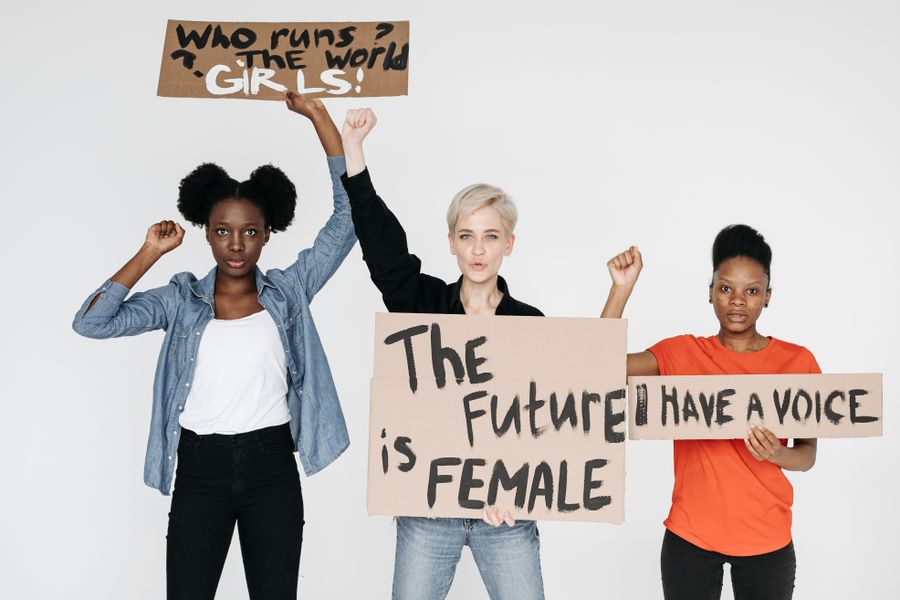
Image courtesy of Pexels.

Related News

Divorce courts hate dads. There is no nicer way of saying it. As if the lack of charitable support for fathers separated from their kids wasn’t punishment enough. Partiality towards women in matters of divorce is wounding already-wounded men. Designed to reign in deadbeat dads, the system ends up beating dads who want to stay tuned in, and keep turning up. Family courts, it could be argued, are not in favour ...
Rod Lampard

Ironically, my marriage ended as it should have begun. After lodging divorce papers the other day, I ambled out of the court offices into Salamanca Place. I deliberately slowed my pace to the steady step of a bridal march in order to soak in the soft morning sun. The sun’s glow wrapped an embrace of blanketing cheer that warmed my sombre mood. Fifteen years earlier, wedding day rain was a disappointing ...
Greg McInerney
News
Dads4Kids News is for writers to share insights, stories, the latest research and news to encourage dads and their families.
Most Read
The opinions of our writers are not necessarily the opinion of Dads4Kids. Please do your own research and come to your own conclusions. We welcome feedback and if you would like to submit an article to Dads4Kids, please contact the editor at info@dads4kids.org.au