
5 Reflections on the Heroism of Austin Appelbee — the Boy Who Saved His Family
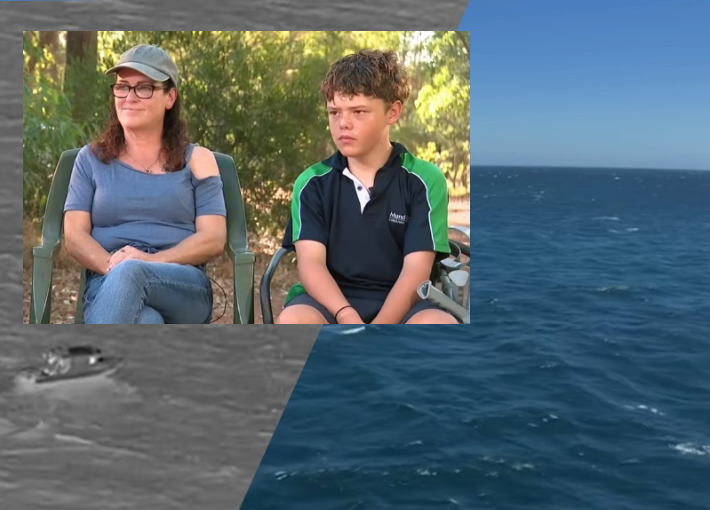
If you’ve followed the news this week, you’ve likely seen the extraordinary story of 13-year-old Western Australian boy Austin Appelbee.
On what should have been a carefree family holiday near Quindalup, a beachside town 200 km south of Perth, strong winds pushed Austin, his mother Joanne, and his younger brother and sister far out to sea on their kayaks and paddleboards.
As conditions worsened and daylight faded, Joanne made the unthinkable decision to send Austin to swim for help, believing he had the best chance of making it.
For four hours, Austin swam roughly four kilometres through rough, shark-filled waters. Exhausted, frightened and alone, he eventually reached shore, collapsed from fatigue, then ran another two kilometres to raise the alarm. His calm call to emergency services helped rescuers locate and save his family before night set in.
Police and rescuers have rightly described his actions as “heroic” — even “superhuman”. His story, which began as a classic tale of Aussie heroism, has ultimately made headlines all around the world.
It’s been fascinating to see how different media outlets chose which details to highlight, giving varying impressions of what kept Austin going and what happened once he reached shore — details I’ll touch on below.
More importantly, as a father, what strikes me are the lessons this teenage lad can teach us about courage, faith and character.
Here are five questions I’ve been reflecting on since hearing his incredible story.
1. Who Raised This Hero?
The first thought that ran through my mind when I heard Austin’s story was: Who raised this kid? What kind of home — and in particular, what kind of dad — produces a boy capable of stepping into such danger to save his family?
I was surprised to learn his father wasn’t with them that day, making Austin’s heroism even more remarkable. He stepped up into the role his dad would have played, taking charge and showing just how capable he was.
His dad has since told news outlets that he’s “super proud” of Austin — and rightly so.
Austin deserves the lion’s share of praise, no doubt. But I also have quiet admiration for the parents — and the father — who helped shape him.
Courage, responsibility and self-sacrifice don’t appear out of nowhere. They are formed quietly over the years through family expectations, moral teaching, faith and example. Austin is living proof that the adults in his world got it right.
As a father, I’m challenged to ask myself how I’m shaping my children today, so they respond like a hero if the situation ever calls for it.
2. Is This the ‘Toxic Masculinity’ They Warned Us About?
We hear a lot today about “toxic masculinity”. Austin’s story is a clear reminder that actually, there’s another kind entirely.
Though he’s only just entered adolescence, Austin displayed the kind of masculinity the world sorely needs: one that protects rather than dominates, uses strength for others, shows courage without bravado, and endures without complaint.
Austin didn’t swim to shore to prove anything; he did it because his family needed him. The instinct to put yourself between danger and loved ones is hard-wired into every man — and it’s something to nurture, not apologise for.
And if we want our boys to grow into men of character, this is exactly the kind of masculinity we need to praise, defend and hand on to the next generation.
3. What if God Were the Real Hero?
One of the most fascinating parts of Austin’s story is how he explains his own survival.
In interviews with outlets like 7News and the BBC, Austin spoke openly about prayer, singing Christian songs, and entrusting himself to God as exhaustion set in. He explained: “I don’t think it was me who did it — it was God the whole time.” He described praying continuously and even promising God he would be baptised if he survived. In at least one account, he spoke of going to church afterwards.
Yet some mainstream coverage — including detailed reports — left faith out entirely, framing his ordeal in purely psychological or physical terms, whether mental tricks, “happy thoughts”, or endurance alone.
It’s a strange thing to leave out, not least because it takes away from Austin’s own, very real experiences. For Austin, prayer and trust in God were central to his survival. They provided a lifeline when strength alone wouldn’t have been enough.
Hearing Austin say that God carried him through reframes the entire ordeal, making God the real hero of his story. That’s something to ponder in a world so quick to dismiss faith.
4. Why Was Help So Hard to Find?
Another detail that some reports included, while others quietly left out, is what happened when Austin finally reached the shore.
He said he struggled to get help because the people on the beach couldn’t understand him. Eventually, he had to run much further to find a phone and call 000 himself. In a busy tourist spot during summer, perhaps this was just a language barrier rather than neglect or malice.
Still, from a parent’s perspective, it’s unsettling. High-trust societies depend on shared language, shared expectations, and an instinctive concern for one another — especially when a child is clearly in danger. When those bonds weaken, the consequences can be serious.
This isn’t about stoking outrage or pointing blame. But it’s worth considering that how we manage issues like mass immigration and community cohesion isn’t just a political topic — it shapes the world our children will navigate even when they are most vulnerable.
5. Do We Underestimate Our Kids?
Finally, Austin’s story challenges the way our culture often views children, especially boys.
We tend to underestimate kids, overprotect them, and delay giving them any serious responsibilities. Yet when responsibility came, Austin rose to the occasion in very impressive fashion.
Courage isn’t born overnight. It grows when kids are trusted, challenged, and shown that what they do really matters. Austin’s story proves that when we believe in our children, love them, and require them to step up, they can actually rise to feats many adults wouldn’t dare.
While the world might keep debating the details, Austin’s story proves that faith, family and responsibility shape heroes long before they face the fire. And as a father, I can only hope I prepare my children in the same way for the battles they’ll face in life.

One Comment
Leave A Comment
Related News

According to the social sciences, 70% of prisoners are fatherless in one way or another. That is the reason prisons are known as homes for fatherless men.
Warwick Marsh

Sociologist David Papenoe said that no civilisation ever survived after its family life deteriorated. But if you don’t believe him, listen to GK Chesterton, “This triangle of truisms, of father, mother and child, cannot be destroyed; it can only destroy those civilisations which disregard it.” If three words could ever sum up the work of Dads4Kids it would be ‘father, mother, child’. These three words are the foundation for everything we know. ...
Warwick Marsh
News
Dads4Kids News is for writers to share insights, stories, the latest research and news to encourage dads and their families.
Most Read
The opinions of our writers are not necessarily the opinion of Dads4Kids. Please do your own research and come to your own conclusions. We welcome feedback and if you would like to submit an article to Dads4Kids, please contact the editor at info@dads4kids.org.au


His father must be very proud of him.