
Anzac Day: Remembrance and Rosemary
April 20, 2026
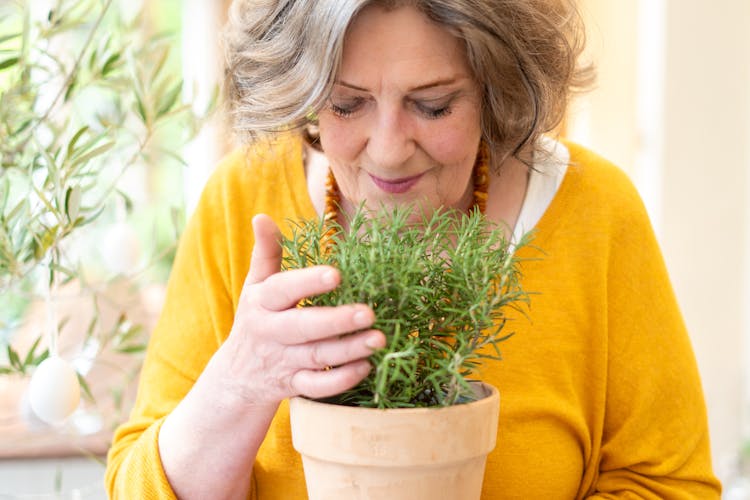
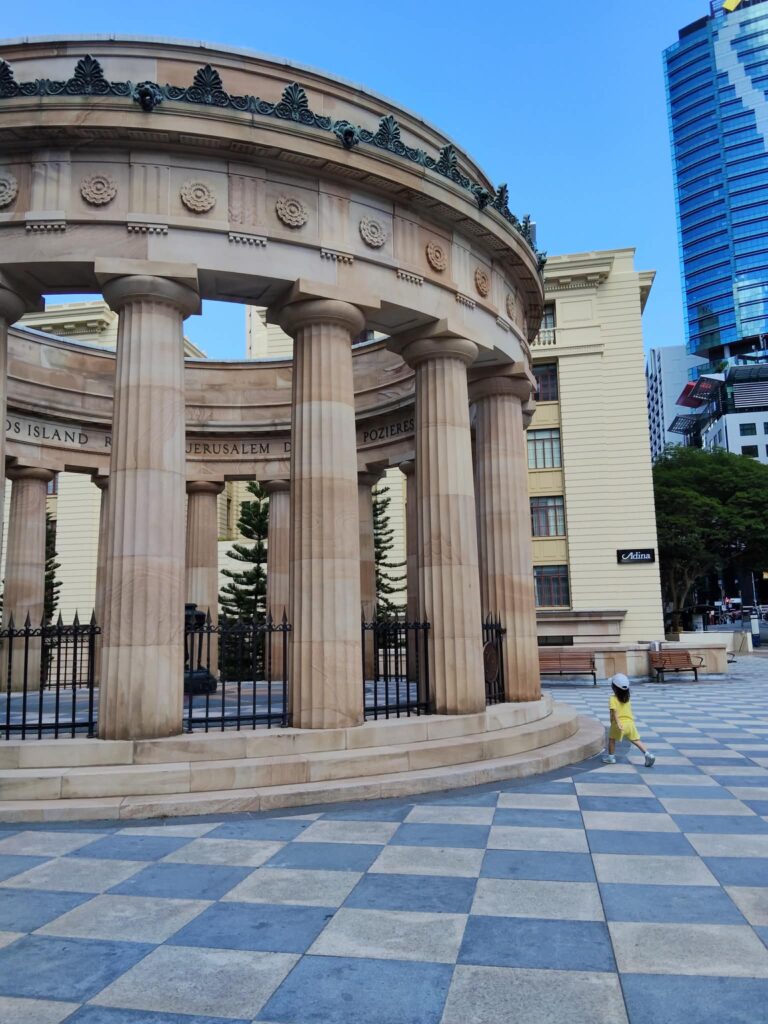
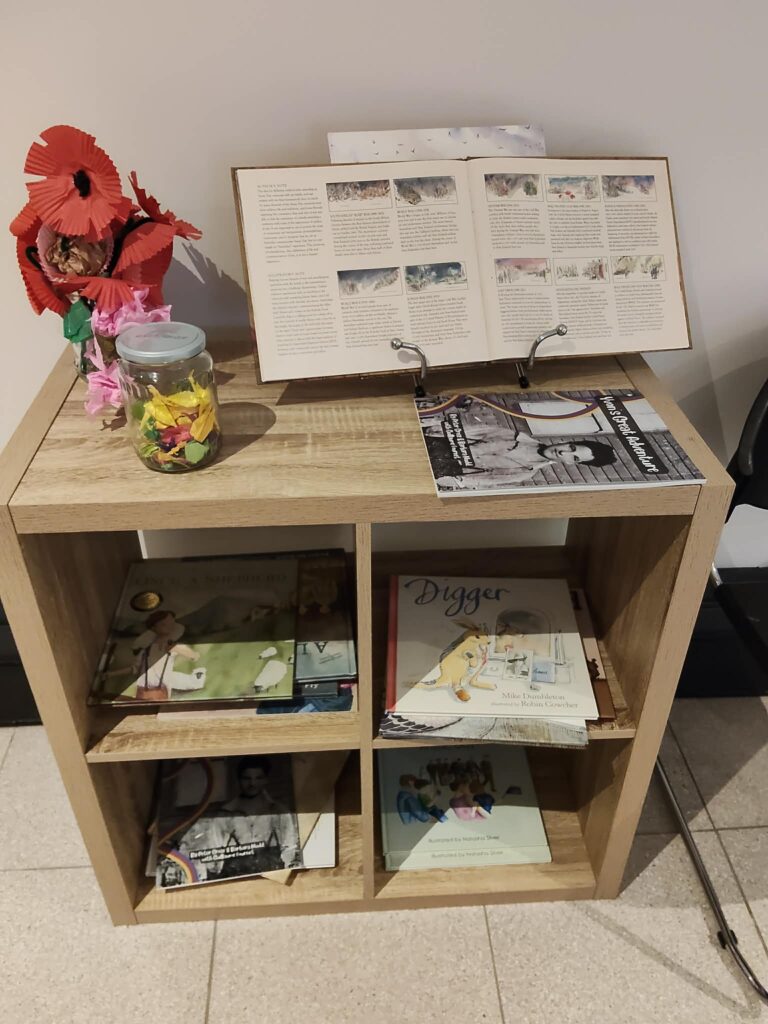
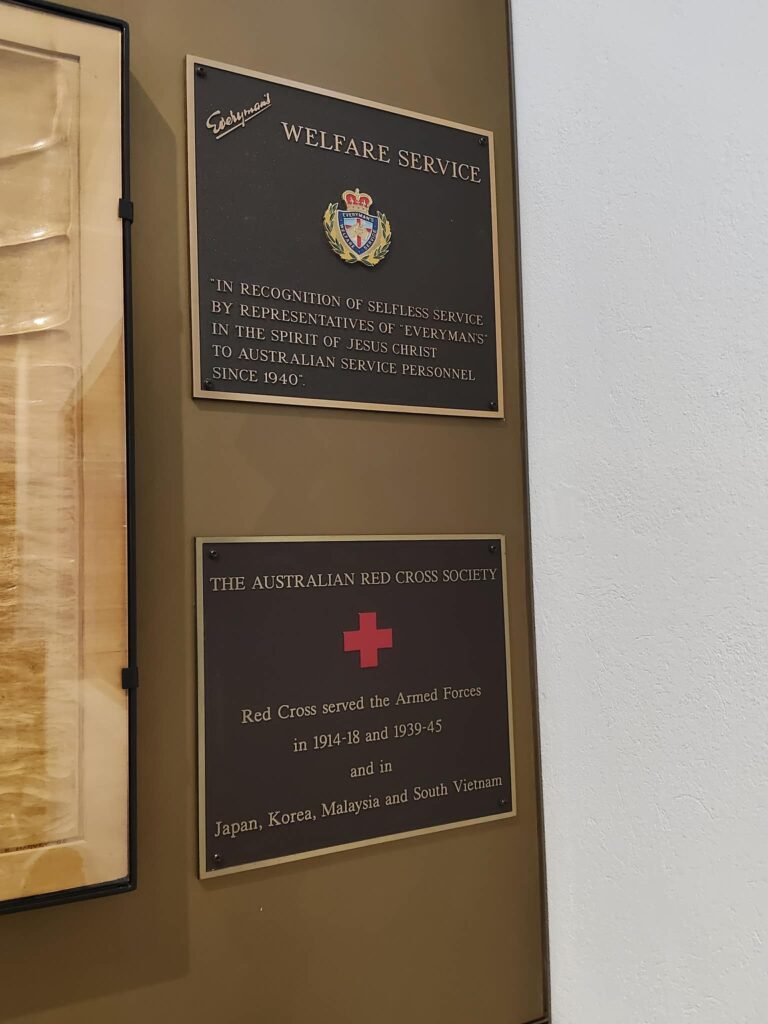
Last week, my family visited Brisbane’s Anzac Square Memorial Galleries, as they had a school holiday craft activity centred on Gallipoli rosemary, which was brought back to South Australia by a wounded digger after the First World War and propagated across the country.
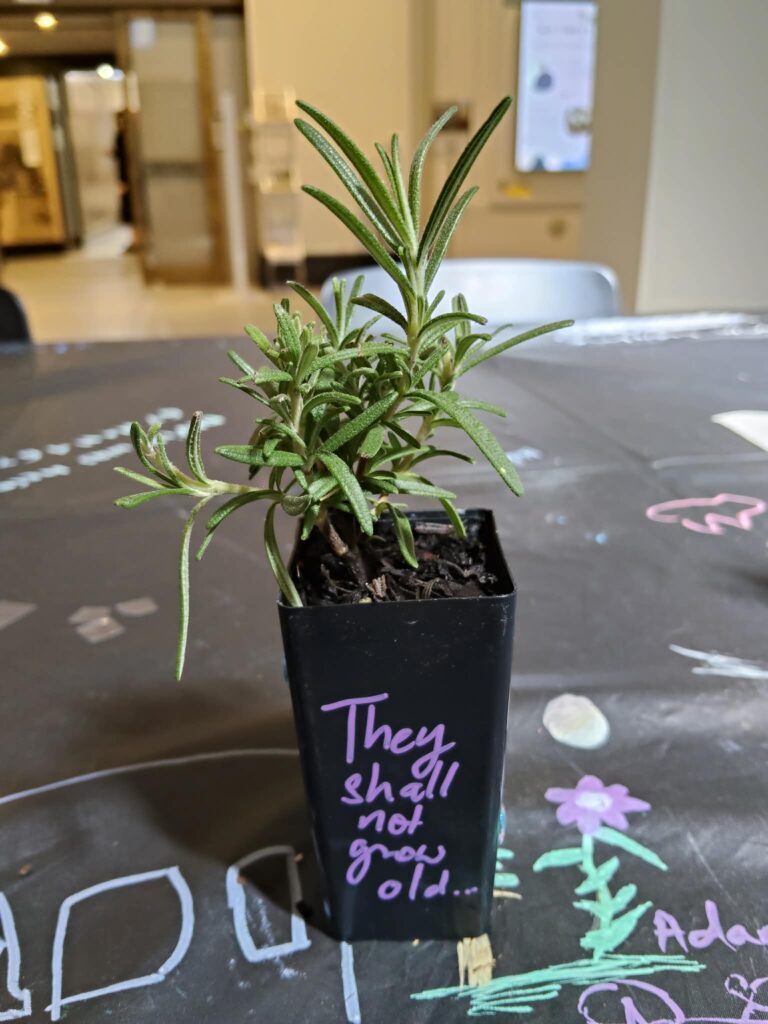
Gallipoli rosemary
The Yandina Eumundi RSL Sub Branch recounts:
“Since ancient times, woody, hardy rosemary has been shrouded in lore. How did this herb originating halfway across the world, at home in dry soil swaying in the ocean breeze up on Mediterranean sea cliffs, become such an important symbol for Australians remembering our ANZACS?
Its journey from the wild, sparse shrubs found cascading down the shores of Gallipoli Peninsula to growing by our Cenotaphs and adorning our breast pockets and lapels at our most significant days of respect for the fallen is a long and significant one, foreshadowed in Ancient Egypt, Biblical lore and even the works of Shakespeare.
… When you stand by the cenotaph on Anzac Day, you might be humbled with the knowledge of how far the plant has travelled to be there.”
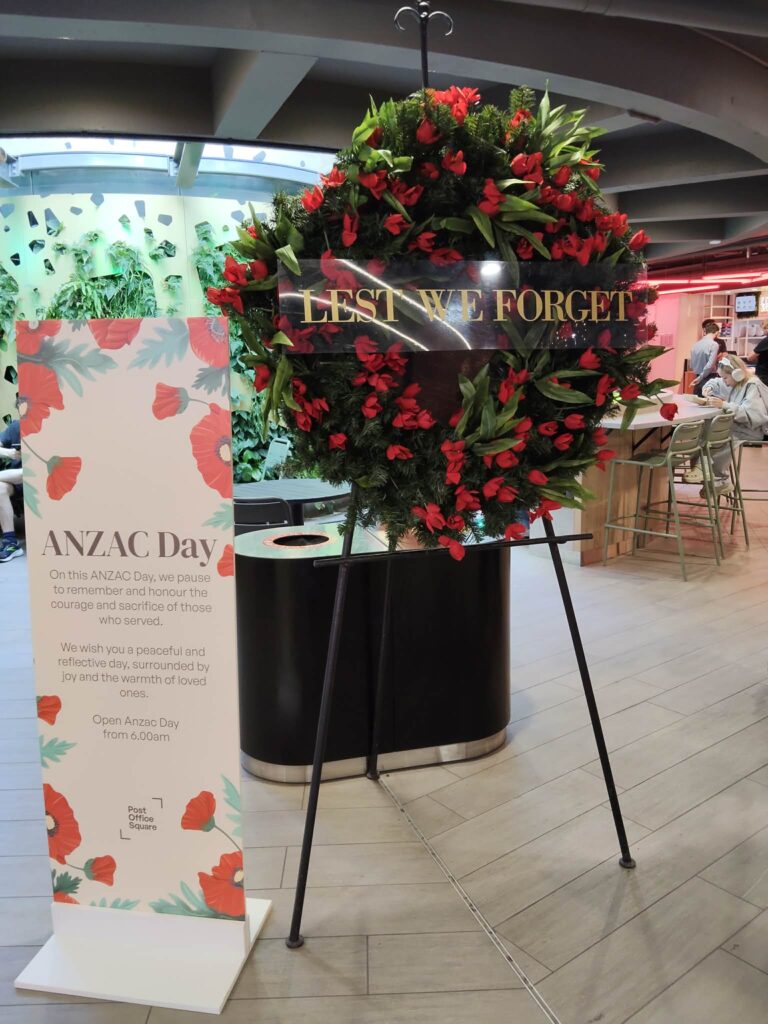
Anzac wreath, Post Office Square, Brisbane
The Department of Veterans’ Affairs’ Anzac Portal relates:
“More than 50,000 Australians served in the Gallipoli Campaign, and more than 8,700 of them lost their lives. After Gallipoli, many of the original Anzacs served in Europe on the Western Front, and some served again in World War II.
Rosemary (Salvia rosmarinus) grows wild on the Gallipoli peninsula. Its native distribution is in the Mediterranean region, Portugal and Spain.
During World War I, a hospital in Daw Park, South Australia, was operating as Keswick Military Hospital. In the 1980s, a gardener at the hospital recalled the history of the rosemary on the grounds. The gardener told David Lawry OAM that a wounded soldier repatriated to South Australia in 1915 brought with him a cutting of rosemary from Gallipoli. The sprig was planted and later propagated. Cuttings from the hospital gardens were sent to nurseries throughout Australia to support Avenues of Honour.”
The Department has a selection of videos on its YouTube channel aimed at lower primary students, explaining the history behind Anzac Day. Here is one particularly moving video:
Medals and Memories
Eileen, the lovely lady who facilitated our session, informed us that we could order miniature medals in memory of our children’s ancestors’ wartime service. Family members wear them on the right side.
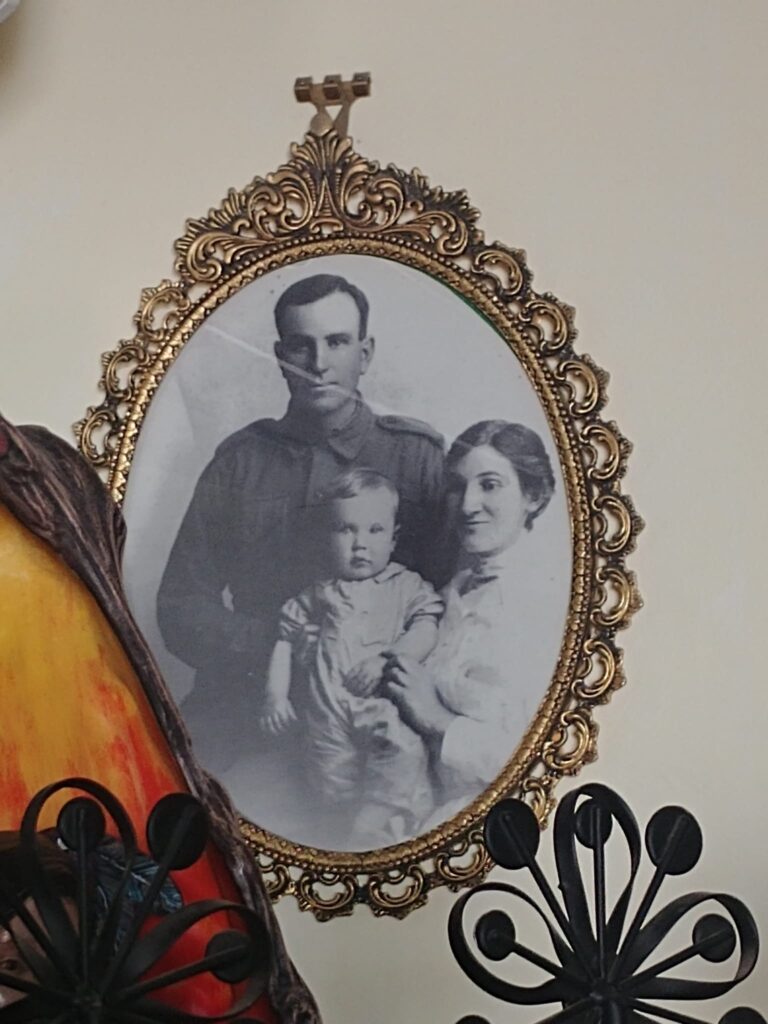 Our children’s great-great-grandfather, who was married with eight children, enlisted in both World War I when his first child was a baby, and World War II along with five of his sons. A fascinating nugget of history to share with the offspring when they are old enough to understand what happened.
You can research the servicemen in your family tree at the Australian War Memorial website, the Virtual War Memorial Australia, and The AIF (Australian Imperial Force) Project. Find a Grave and FamilySearch are helpful sites, too.
It feels incredible to be connected to those who risked their very lives fighting for freedom a century ago, and to think how different our lives might have been if they had not stood up when it counted. Also, extremely grateful that those in my husband’s family tree all managed to survive!
How do you plan to commemorate Anzac Day? Leave a comment below.
___
Image courtesy of Pexels.

Related News

I finally got it all together. Then I forgot where I put it. In my life BC (before children), I had a career based around my impeccable attention to detail. Writing, proofing, editing. Nothing gave me greater pleasure than spotting a typo at 50 paces. I don’t know whether it’s the sleep deprivation, the perpetual noise or the multitude of extra tasks demanding my attention these days but lately… and I’m ...
Annette Spurr

Are you able to graciously accept a “no”, or would you be cross and upset about it? I find it hard to say no to a lot of the opportunities in my life. The big opportunities that are life-changing, I pray about and give some thought to before saying yes. But the little decisions here and there of being asked to do this and whether I’d like to do that, I ...
Rebecca Senyard
News
Dads 4 Kids News is for writers to share interesting insights, news, and stories, to encourage dads and their families.
Most Read
The opinions of the various writers are not necessarily the opinion of Dads4Kids. Please do your own research and come to your own conclusions. We welcome feedback and if you would like to submit an article for the Daily Dad, please contact the editor at info@dads4kids.org.au