
The Other Sex: Language Matters
July 16, 2025

Language Matters
For years, advocates of inclusive language have been steadily drawing our attention to the clumsy use of language which can alienate various ethnic groups or religious adherents, the elderly, the young, the disabled, the poor, or even whole sexes. Why? Because language is more than just about communicating our thoughts effectively. Language is also an active participant in forming those thoughts.
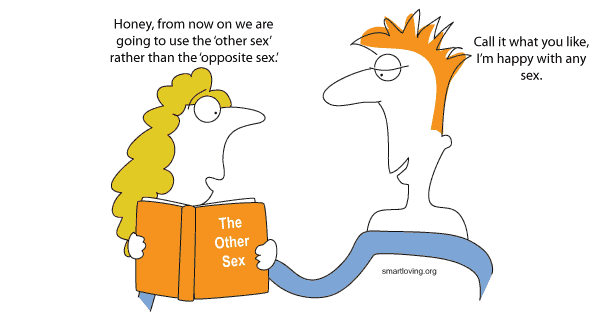
For example, in our culture it is common practice to refer to the ‘opposite’ sex. This term implies that men and women are not just different, but are opponents; that they are in opposition to each other. Perhaps this is appropriate, as indeed, it seems that men and women are often pitted against each other in our society. Terms such as ‘battle of the sexes’ and ‘gender divide’ betray a competitive mentality between the sexes – a mentality that not only discourages appreciation of our sexual differences, but promotes disdain towards those characteristics that are seen as weaknesses in the, so-called, ‘opposite’ sex.
Complementarity vs Competition
The issue is not just about accuracy, it’s about mentality. We have consciously chosen to use the term ‘other sex’ instead of ‘opposite sex’. It’s a term that can acknowledge our differences as men and women without implying inequality or opposition. It suggests complementarity rather than competitiveness. It invites us to appreciate and celebrate our differences rather than denigrate them. It fosters curiosity towards the mystery of gender difference rather than frustration, bewilderment or resigned tolerance.
Yes – language does matter. Language not only expresses our thoughts both conscious and subconscious, it also influences them. Language is not the slave of our communication – it is a dynamic force capable of interacting with and reforming our attitudes and opinions. Next time you find yourself talking about the ‘opposite’ sex – try using ‘other’ sex and see if it takes you to a different way of seeing our differences.
 ___
___
Republished with thanks to SmartLoving. Image via Adobe.

Related News

To prevent sunburn now and skin cancer later in life, make sure your children abide by the easy steps to be SunSmart. Sandwich? Check. Water bottle? Check. A hat, sunscreen, sunglasses — to help your kids stay SunSmart? They should definitely be instant ‘checks’ when packing the schoolbag daily! Here in Queensland, we have the highest rates of skin cancer in the world. High levels of sun exposure in childhood increase ...
Annette Spurr

Mothers are important! Let’s face the facts. You cannot have a father without a mother. Dads4Kids was founded in 2002 with the main purpose to improve the well-being of children by increasing the proportion of children growing up with involved, responsible, committed and loving fathers. Whilst our main vision is to support fathers our broad vision has always been to empower families. A family is made up of a mother and ...
Warwick Marsh
News
Dads4Kids News is for writers to share insights, stories, the latest research and news to encourage dads and their families.
Most Read
The opinions of our writers are not necessarily the opinion of Dads4Kids. Please do your own research and come to your own conclusions. We welcome feedback and if you would like to submit an article to Dads4Kids, please contact the editor at info@dads4kids.org.au