Forgiveness is the Life Blood of Marriage
March 30, 2023
“Forgive them, for they know not what they do” (Lk 23:24). These words of Jesus as he was being crucified were meant not just for his executioners, but for all of us. His love transcends all our limitations and failures and calls us into life.
We all have someone to forgive; someone who has disappointed, betrayed, abandoned or hurt us in some way. For those of us who are married, it’s practically impossible that we haven’t wounded each other at some time.
As Christians, we know that Jesus commands us to forgive, not just once, but “seventy times seven”! (Matt 18:22) Elsewhere he commands us to “love your enemies and pray for those who persecute you” (Matt 5:44). And then there is the Lord’s prayer: “Forgive us our sins as we forgive those who sin against us” (Luke 11:4).
Forgiveness is not presented to us as an option by Jesus. It’s not a suggestion — it’s a command. Why? Because forgiveness is central to our ability to be in relationship with him. It is central to our spiritual growth and foundational to our psychological health.
Jesus doesn’t command us to forgive because it makes him feel better. He does it because he knows that a lack of forgiveness is perhaps the single most destructive force in terms of our ability to receive his love.
A lack of forgiveness is toxic to our soul and to our health. The emotional injury might seem insignificant, especially if we compare it to someone who has been grievously injured. But that is not the point. The objective severity of the offence that caused the injury is irrelevant to the subjective experience because the same act might cause little harm to one person and drastic injury to another.
One of the consequences of failing to forgive is the accumulation of resentment. When we fail to forgive, the emotional injury festers like a bullet wound. The skin may heal over the top but underneath the bullet continues to harm us, draining our physical resources and eventually making us seriously unwell. Forgiveness is the only way to excise the ‘bullet’ so that we can begin to heal.
Forgiveness isn’t healing in itself but is the first essential step. Once we forgive, healing becomes possible and, in many cases, spontaneous. Without it, the wound remains, even though it may be buried deep where we rarely think about it consciously.
And it continues to impact us by making us overly sensitive, cautious, and perhaps cynical. When we’re emotionally injured, it’s natural to withdraw from the person who hurt us, but we also tend to be guarded with others. We approach all our relationships with wariness.
In marriage, forgiveness is absolutely essential for us to begin the process of healing. Yet it is often misunderstood. Many people we work with really struggle with the fear of being hurt again. When we form relationships of intimacy and trust, we open ourselves to the risk of being hurt.
But failing to forgive doesn’t protect us from further hurt. In fact, it primes us for further hurt. For example, when we are hurt because our spouse has ignored us, the resentment keeps us in a heightened defence mode – we are primed and alert expecting to be ignored again. Everything our spouse does is viewed through the lens of this expectation and soon, even minor infractions, become evidence of a systematic pattern of being ignored.
We interact with so many couples who are stuck in a pattern of resentment and unforgiveness. It’s toxic for a relationship and only gets worse if not consciously dealt with.
It’s important to understand that forgiveness doesn’t require us to reconcile or even trust the other person. Forgiveness is an individual process of self-liberation. Once we have forgiven, and have begun the process of healing, we are in a better place, a stronger place, to make careful judgements about whether reconciliation is possible or trust is advisable.
Someone asked us recently if there was ever a situation when not forgiving would be better or ok. Our answer is no. There is simply no circumstance where refusing to forgive would be to our benefit. Forgiveness is a personal gift we give to ourselves – it is the gift of freedom. Failing to forgive cripples us spiritually; it closes our heart to the love of Jesus and leads us to keep him at a distance.
There is simply no spiritual or psychological reason to do this. Jesus never asks us to do something that would harm us. Jesus’ command to forgive is not meant to be a burden – it’s meant to be a liberation. Forgiveness frees us from the bondage of resentment and unhealed wounds. It is one of the most powerful spiritual resources available for human flourishing.
As we move into Holy Week, find one thing you need to forgive your spouse for. It will truly be the most powerful way to honour the God who lays down his life for us.
___
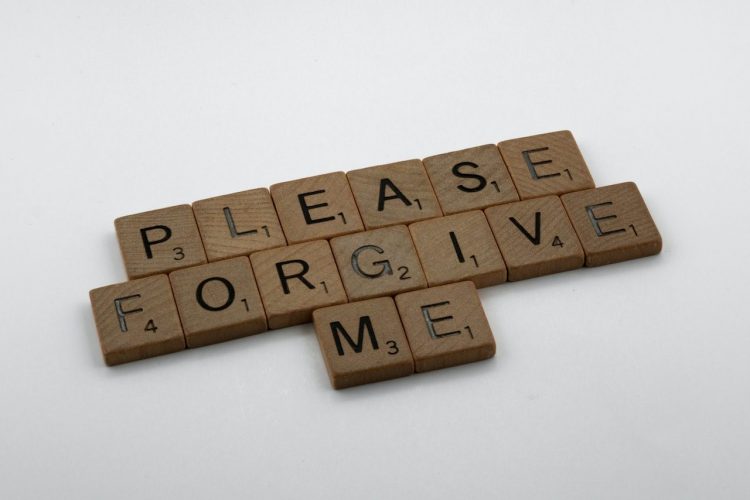
Originally published at SmartLoving. Photo by Brett Jordan.

Related News

We teach couples strategies and skills for navigating relationships more effectively. As important as these frameworks are, they are not the critical factor in avoiding divorce or building a successful marriage. Rather, the key appears to lie elsewhere, in the practice of virtues.
Byron and Francine Pirola

Only a few days ago, I got a call from the eldest daughter of a dear friend telling me that her Dad had passed way from a heart attack. Ian was at his work, and without any apparent warning, he collapsed and died. He was comparatively young and in good health. After the phone call, I was in a state of shock. We didn’t see each other a lot but we ...
Warwick Marsh
News
Dads 4 Kids News is for writers to share interesting insights, news, and stories, to encourage dads and their families.
Most Read
The opinions of the various writers are not necessarily the opinion of Dads4Kids. Please do your own research and come to your own conclusions. We welcome feedback and if you would like to submit an article for the Daily Dad, please contact the editor at info@dads4kids.org.au