
Stop Telling Men to “Open Up”
September 15, 2026
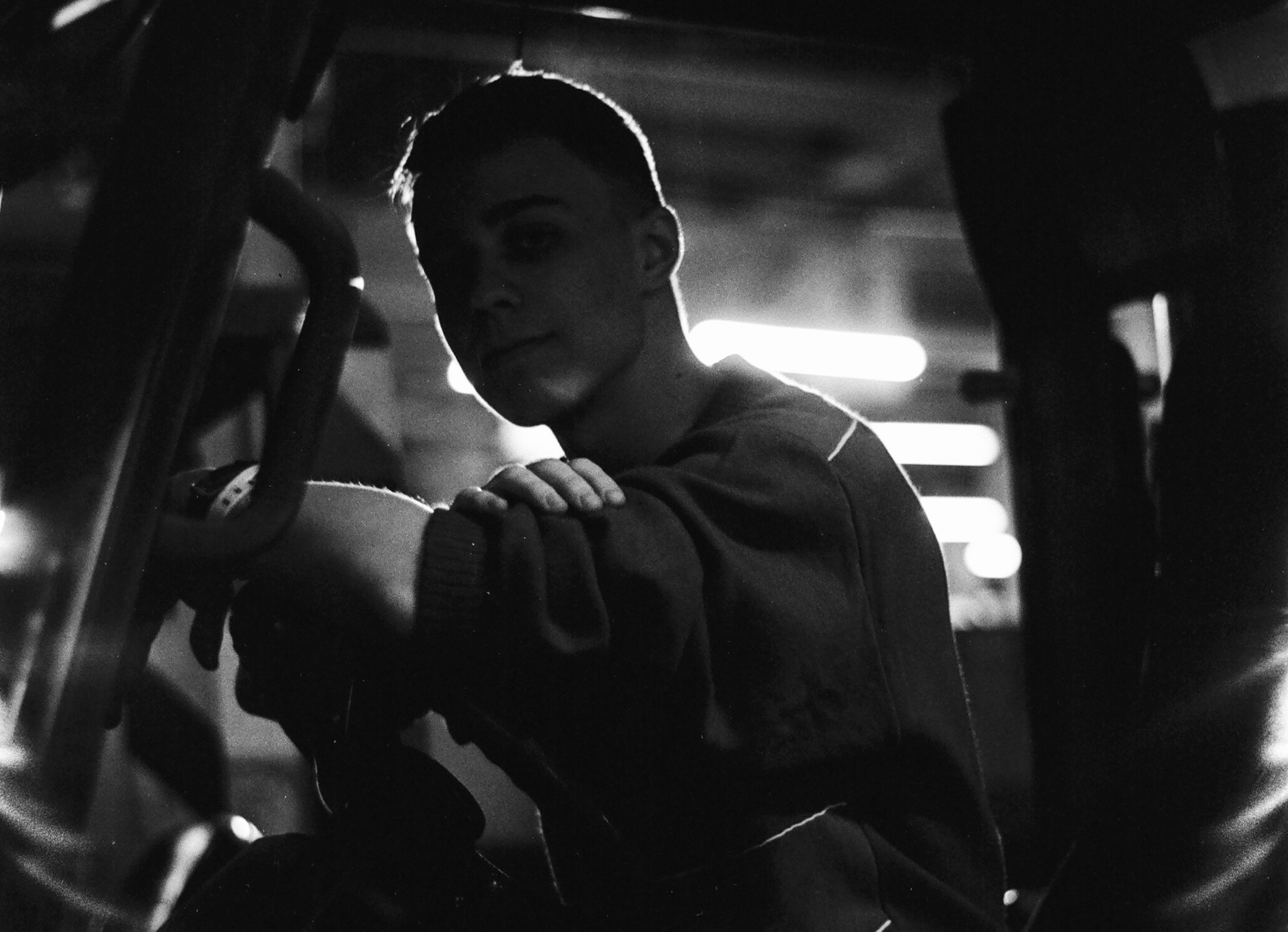
Instead, let’s start fixing the systems that leave them alone.
When the conversation turns to men’s mental health, people always say the same line on cue: “men need to open up more!” As if the crisis is all a personality defect found in most men. As if the solution is a pep talk about feelings. It’s a convenient dodge out of a true, productive discussion.
I want to talk about the actual problems. Ones that are structural and don’t just shift blame and shame onto the men themselves.
What A Tow Truck Driver Taught Me
The other night I was speaking with a first-responder tow truck driver. I was sitting in his truck for about an hour and a half waiting for my stepdad to pick me up after a bad accident. The industry is overwhelmingly male at 96 percent. He and his colleagues pull wreckage off highways, cut people out of crumpled metal, and stand by while families learn the worst news. They’re among the first on the scene of an accident. They see what police, firefighters, and paramedics see. Then they drive home.
Unlike those other first responders, they often don’t get the structured support that taxpayers already fund for public-safety agencies like peer-support teams, mandatory post-incident counselling, specialised trauma therapists, and presumptive workers’ compensation for PTSD. Emergency tow operators are left to process occupational horrors on their own, often after a night shift like this man, often as independent contractors with very few benefits. Researchers have called them the “forgotten victims” of road trauma. Support services are limited. Coping for them too often means alcohol, silence, or leaving the job.
This isn’t a failure of these men and their “stoicism” but an actual policy gap. Hundreds of thousands of men work in towing across the world. Recognising them as first responders and extending the same mental-health infrastructure we already built for other emergency workers would be a concrete intervention, not another lecture about men and their inability to express their feelings.
The pattern repeats across the jobs men still do in disproportionate numbers. Construction and extraction have among the highest suicide rates of any occupational group. In recent analyses, construction workers have died by suicide at several times the rate they die from on-the-job injuries, which is already high in numbers. Installation, maintenance and repair, farming, fishing, logging, and other dirty and dangerous, physically punishing trades that benefit us all and make our lives comfier and cozier show the same elevated risk. They are workplaces with irregular hours, up and down income, chronic pain, high injury rates, substance exposure, and little of the institutional aftercare we treat as normal for uniformed services. These aren’t abstract “masculinity” problems.
A Feminised System and the ‘Failure’ to ‘Open Up’
We’ve built a mental-health system that assumes the patient will sit in a room and chat about their inner life easily. Many men don’t want to use that feminised system, and scolding them for it doesn’t make the system better. Peer support from people who have done the same work, practical interventions, treatments that don’t require talking forever first — approaches such as EMDR that some clinicians already note work well for trauma in men without forcing talk — fit the lives of shift workers and tradesmen more closely than a model designed around a weekly conversation. We should change the system to reach men, not demand that men become a different kind of human.
The neglect is institutional as well as occupational. The United States has eight federal offices devoted to women’s health and none dedicated to men’s. Men die younger. They account for the majority of suicides and a large share of overdose deaths. Most men who die by suicide have reached out prior, but the system didn’t adequately help them. Is that proof they “wouldn’t open up!” or is it proof that the pathways we built aren’t helping them and we desperately need an office of men’s health?
We don’t have to pit men and women against each other here. Men and women are on the same team! Fathers, sons, husbands, and the men who protect us, save us, keep roads clear and the buildings standing are not disposable. I always say we need to show these men more gratitude, but when it comes to their mental health needs, gratitude isn’t enough, though it wouldn’t hurt for their well-being. What they need is the same seriousness we already apply elsewhere: presumptive coverage for work-related trauma in high-exposure civilian roles, funded peer programs, occupational health standards that treat psychological injury as real, and a federal focus that treats male health outcomes as a public problem rather than a “male privilege” problem.
Telling a tow truck driver who has just seen a fatal wreck that he should be more emotionally available isn’t helpful advocacy but extending first-responder mental-health benefits to the men who stand in the same glass and blood as the police, firemen and paramedics is. We know how to build those structures. We’ve already built them for some workers. But will we build them for these men who need it, like the compassionate tow truck driver who made me feel safe after a traumatic experience of my own?
___
Image via Pexels.

Related News

What will Trump’s America be like for kids? In answering this question, three issues come to mind. For the sake of alliteration, let’s call them: guns, gender and gestation.
Kurt Mahlburg

I’m tired. Last night I had just driven from Coffs Harbour to hold a DIDs (Dads in Distress) meeting in Forster, and returned in the early hours of the morning. I am on the road a lot. My car is my office, often it’s also my dressing room, and often it’s my bedroom. Often on the long hauls, I find myself talking to a very special passenger. My Lord, my Higher ...
Tony Miller
News
Dads4Kids News is for writers to share insights, stories, the latest research and news to encourage dads and their families.
Most Read
The opinions of our writers are not necessarily the opinion of Dads4Kids. Please do your own research and come to your own conclusions. We welcome feedback and if you would like to submit an article to Dads4Kids, please contact the editor at info@dads4kids.org.au