
The Men in Your Life Are Struggling More Than You Know
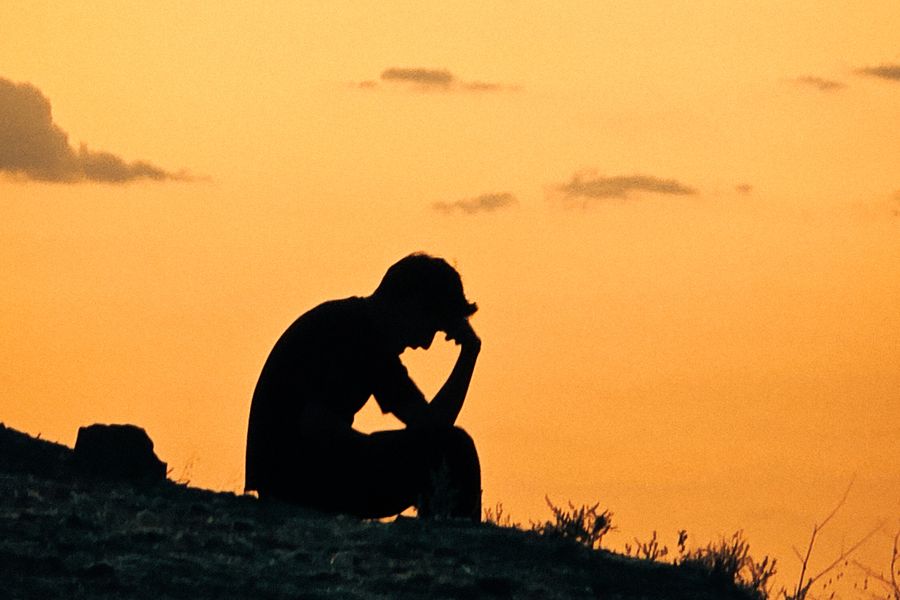
They feel like failures. They sense that the world moves around them without them having much say in it. They wonder if they will ever be enough.
Meanwhile, the prominent narrative in society today, held by most women, is that boys and men have all the privilege, and they don’t need compassion or support.
The Hidden Crisis Behind the “Male Privilege” Narrative
Recently, a friend sent me a clip of an interview with actress Olivia Wilde, in which she told Louis Theroux that boys and men don’t need an “encouraging word” today because the world is made for them. Her lack of compassion is not unique; it’s what most people believe today. But they are sorely misguided.
A groundbreaking new report from the Institute for Family Studies, America’s Demoralized Men, Part II: Lost Pathways, Greater Struggles, puts clear numbers on young men’s suffering. Forty-three percent agree that “I am inclined to think that I am a failure.”
Sixty-one percent say they often feel they have little control over the things that happen to them. Fifty-four percent report that they never seem to do enough to please people. Does this sound like a group of individuals who don’t need an encouraging word?
These are the admissions of young men who still want what most of us say we value, like responsibility, work that supports a family, marriage, and fatherhood. But they find the pathways to those blocked or vanished, as high-status women tell them the world is theirs and their challenges don’t matter.
The report’s authors, Joseph E. Davis, Michael Toscano, and Ken Burchfiel, describe this state of mind as demoralisation. It’s not the same as clinical depression, though the two often travel together. It’s the experience of living with a gap between what you aspire to and what seems possible.
In Part I of their study, researchers showed that the overwhelming majority of these men still hold worthy aspirations. They want to be responsible providers. They want to date, marry, and become fathers. They define adulthood in terms of self-direction and financial independence. Yet many don’t feel they have reached it.
The mismatch produces frustration, stress, and a corrosive sense of inadequacy. Blaming them for the gap and calling them fragile, toxic, or ‘checked out’ only deepens the problem.
Isolation, Loneliness, and the Erosion of Community
Look first at their social lives. Slightly less than half of these men feel a steady emotional connection to others. In the past 30 days, 25 percent felt lonely all or most of the time; 26 percent felt isolated; 20 percent said they seldom or never felt loved or wanted.
Forty-two percent report two or fewer close friends, including 9 percent who have none at all. The best predictors of having three or more friends are the very institutions that have weakened: marriage, church, and school.
Men who participated in all-male groups like sports teams during their school years are notably more likely to maintain friendships later. Civic and religious participation is low across the board. Only 31 percent volunteer. Twenty-nine percent belong to a faith-based group. Nearly half agree that they do not belong to anything they would call a community.
Loneliness has been rising among young adults of both sexes for decades. What stands out is how few buffers many young men now have. Married men with children report far less loneliness than unmarried men without children. Full-time workers are better off than those not working. Religious men and those with college or trade credentials are more connected. The pattern is consistent: the farther a man is from the remaining institutions that once structured male life, the more isolated he feels.
The same sense of powerlessness appears when young men look at the future. About half agree that “No matter how hard I work, people like me will never achieve the American Dream.” Seventy-two percent believe that “Who you know is more important than ability or hard work in getting ahead.” Seventy-seven percent say the constant pressure to perform and achieve never ends.
But these men haven’t given up on effort. Eighty-four percent say that having ambitious plans for the future describes them at least somewhat well. Eighty-one percent believe they can do just about anything they set their minds to. They haven’t abandoned hope in themselves. They’ve lost faith that the system still rewards steady effort with the traditional markers of adult success: stable work, a home, and a family.
Coping Mechanisms and Structural Collapse
Many carry heavier burdens than the public conversation suggests. Twelve percent have been incarcerated. Forty-four percent have a loved one who has gone to prison, died of a drug overdose, died by suicide, or been killed. Those with these experiences report markedly higher rates of depression, anxiety, ADHD, and bipolar disorder.
Electronic escapes are common and costly. Twenty-three percent gamble daily; another 12 percent do so several times a week. Forty-four percent play video games many times a day. Forty-two percent watch pornography daily or several times a week.
Regular online gamblers report significant distress from the activity. Daily pornography users show elevated loneliness, depression, and anxiety. Feeling like a failure is tightly linked to these habits: 66 percent of daily gamblers and 63 percent of daily pornography viewers say the failure statement describes them, compared with 42 percent of young men overall. As Evie has written before, Big Tech preys on young men’s vulnerability, and they’re seriously paying the price.
Men aren’t thriving when they spend their evenings betting or scrolling through explicit images. This isn’t an excuse, yet treating these behaviours as moral failings rather than symptoms of deeper disconnection misses the point. When the older pathways, like apprenticeships that led to skilled trades, steady manufacturing jobs, neighbourhood clubs, and churches that expected young men to show up, have thinned or disappeared, people turn to whatever’s left.
The report’s conclusion is clear-eyed: the most powerful explanation is structural. The social fabric has become formless. Clear roles, inherited life courses, stable jobs, and reliable institutions have given way to an open field of options that many young men experience as a void. College remains one of the few remaining structured pathways, and men who complete it (or a trade program) generally fare better. For everyone else, the transition after high school often feels like stepping into empty space.
This is where the conversation usually turns ugly. Commentators lecture young men about toughness, urge them to “man up,” or diagnose them with “toxic masculinity.” The data doesn’t support the caricature. These men still affirm traditional virtues of responsibility and sacrifice for others at rates above 85 percent. They want marriage and children. What they lack isn’t character so much as a coherent social world in which character can take root and be recognised.
A Path Forward: Compassion Over Condemnation
Women and the wider culture have a part to play in restoring that world. The blaming and shaming that dominate so much public talk about men actively harm the very relationships women say they want. When women absorb the message that men are inherently monsters, or that traditional male provision is optional or oppressive, the dating pool becomes colder and more vicious.
The Institute for Family Studies finds that many unmarried men want to date, yet struggle to find partners who will go out with them; half report difficulty finding someone willing. Fear of rejection is high. A culture that treats male initiative as potentially predatory doesn’t make dating easier.
Women who value commitment, family, and mutual respect can push back against that climate simply by treating men as full human beings rather than as problems to be fixed or threats to be managed.
Society at large must rebuild the practical supports that once helped ordinary men become husbands and fathers. That means expanding real alternatives to the college-for-all model with apprenticeships, trade programs, and school-to-work pipelines that don’t treat blue-collar work as second-class.
It means strengthening the institutions that still encourage male friendship and belonging: churches, sports leagues, and service clubs. It means resisting the cultural habit of pathologising ordinary masculinity while offering no replacement.
Fathers matter enormously; the young men with strong relationships to their fathers are more likely to be married, educated beyond high school, and connected to community. Policies and cultural norms that make fatherhood more stable and more valued will help the next generation of sons.
The men in this survey are not asking for pity. They are describing a landscape in which the old maps no longer work and new ones have not yet been drawn, and they’re being disparaged all along the way. Many are still ambitious. Many still hope.
What they need is less condemnation and more room to become the responsible men most of them already want to be. Women who refuse the easy attacks of blame, who choose compassion not contempt, and who insist that healthy partnerships require mutual respect rather than mutual suspicion can help create that room.
___
Republished with thanks to Evie Magazine. Image courtesy of Pexels.

Related News

Despite the failings and traumas handed down from past generations, with the grace of God, we can break free of toxic cycles and build a far better future for our children. Those who grow up hurting from being fatherless can learn from our parents’ mistakes and develop into life-giving, dedicated fathers. Like every single one of our five kids, wearing the dad hat was for me a cliched process of having ...
Rod Lampard

Coronavirus is sweeping across Australia. Here are some tips to boost your immune system — and your loved ones’ immunity — so that you will be prepared if you catch it. Your body is your best friend. You live in your body, so it is important you take care of your body. The 12 Ways to Beat Covid-19 are more based around the concept of prevention as opposed to cure. The ...
Warwick Marsh
News
Dads4Kids News is for writers to share insights, stories, the latest research and news to encourage dads and their families.
Most Read
The opinions of our writers are not necessarily the opinion of Dads4Kids. Please do your own research and come to your own conclusions. We welcome feedback and if you would like to submit an article to Dads4Kids, please contact the editor at info@dads4kids.org.au