
Society Wins When Fathers Are Respected
August 11, 2026
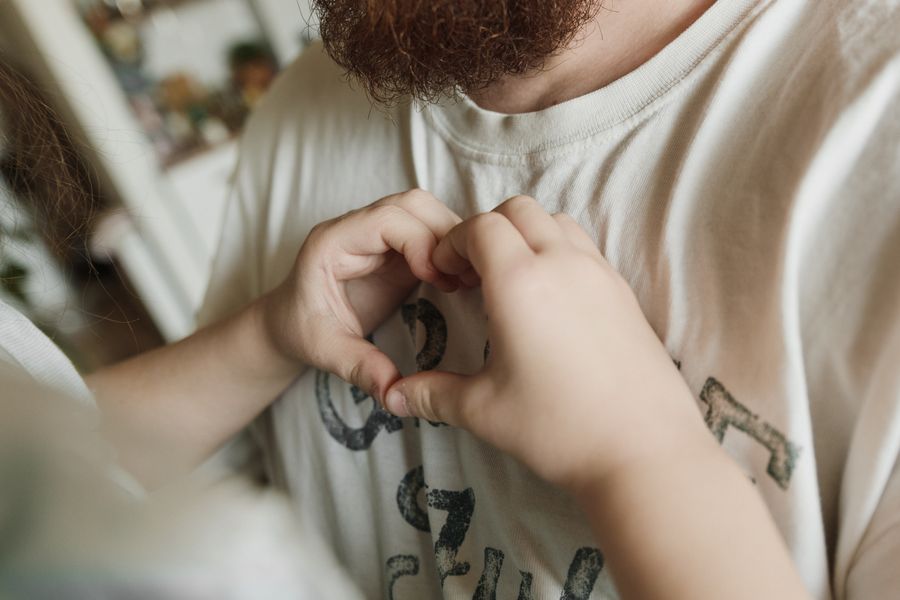
Men’s happiness has declined significantly in recent decades, and hardly anybody has paid attention.
According to a recent research brief from the Institute for Family Studies, data from the General Social Survey shows that the share of men ages 25–44 who describe themselves as “not too happy” has more than doubled—from 11% in the 1980s to 24% in recent years. The drop is especially steep among working-class men: 27% of those without a bachelor’s degree report being “not too happy,” compared with 17% of college-educated men.
This rise in unhappiness has coincided with a sharp decline in family formation. The share of working-class men in this age group who are married fathers has fallen from 58% in 1980 to just 34% today.
The Quiet Crisis of Men’s Happiness
Class inequality between working-class and college-educated men is evident in their family experiences. The Institute for Family Studies find that working-class men are less likely to have grown up with married parents, less likely to have had a good relationship with their father, and less likely to have felt loved by their father.
There’s a direct connection between working-class men suffering from worse family conditions and feeling less hopeful about life than their college-educated peers. Of all the familial relationships, the most impactful one is the father-son connection, as the Institute for Family Studies’ research indicates. This evidence makes it clear: if we want young men to live purposeful lives, fatherhood must be at the forefront of the conversation.
Thankfully, boys and young men still want to be dads. In fact, more young men say having a family is their top priority than young women today. Among childless young men in a recent analysis, 62 percent want to become fathers—and for most, fatherhood and marriage remain inseparable.
Our culture is drowning out a quiet heartbeat: young men desire family and fatherhood.
Fathers Matter to Children
Over the past few decades, our society has systematically devalued fathers. The chants of “Who needs men anyway?” have echoed from classrooms to boardrooms, from TV and movies to corporate diversity trainings.
Our culture has told boys that traditional masculinity is toxic and dads are optional accessories in family life. We have stripped men of their cultural and economic sense of purpose, as stable jobs that once allowed a single income to support a family have grown scarce, but we’ve also eroded their purpose for children who need fathers.
Who needs men? Children need men. Children need dads.
Many “warriors for women” still frame men as emotionally distant providers whose financial contributions are no longer necessary now that women earn their own money. When in fact, the Institute for Family Studies has shown that today’s fathers are more present than ever before, both in terms of domestic work and time spent with children.
If we elevate today’s fathers and celebrate the unique things they bring to the parenting table, we can hand young men the sense of purpose they’re desperately lacking in our modern culture, which would no doubt bring an increase in their happiness. We shouldn’t return to a rigid 1950s household model, but we should be honest: children thrive with both a father and a mother, and fathers offer irreplaceable gifts that mothers, for all their brilliance, can’t replicate in the same way.
Fathers excel at building independence, risk-taking, and emotional regulation in ways that complement maternal nurturing. While mothers often provide comfort and verbal processing, fathers tend to encourage physical play that builds confidence and teaches boundaries—think wrestling on the living room floor or letting a toddler climb a little higher at the playground. That “scary” dad energy isn’t neglect; it’s preparation for a world that won’t always cushion every fall.
Fathers model personal accountability, respectable authority, problem-solving under pressure, and the kind of quiet stability that boys desperately need to see in action. Girls benefit too, learning what healthy male strength looks like before they choose partners of their own.
Yet we’ve spent years pretending otherwise. Media portrayals reduce dads to authoritarian villains or bumbling sitcom sidekicks next to the strong mom. Schools emphasise “toxic masculinity” workshops, while glossing over father absence as a driver of everything from boys’ academic struggles to higher rates of juvenile crime. This ideological view claims that men aren’t needed, that fathers never truly loved their children, and that only women deserve support. It permeates policy, education, and popular culture, and it needs to go.
The consequences are right in front of us. Young men are demoralised like never before. Labour force participation among men in their prime working years has declined. Marriage rates are down. Birth rates are plummeting.
Blame and Shame
When we shame men instead of praising what they bring, we push them toward video games, pornography, sports betting, or radical online spaces—anything that offers a sliver of the competence, recognition and camaraderie they crave. When they seek refuge in male-dominated corners of the internet, they are presented with similarly destructive messaging that disparages marriage and treats women with contempt.
Instead of endless articles about “the crisis of masculinity,” let’s spotlight the quiet heroes: the truck driver who coaches his son’s Little League team after a long shift, the software engineer who turns off his laptop at 5 p.m. sharp to have family dinner and read bedtime stories, the blue-collar dad teaching his daughter how to change a tyre.
Media creators, influencers, thinkers, policy wonks and educators have enormous power here. Classrooms could teach students about the benefits of present fatherhood alongside lessons on maternal strengths. Churches could minister more to families, and community groups could launch father-son workshops.
Policy can help too, if it’s used to promote fatherhood. Paid parental leave should include meaningful incentives for both parents to bond with their children—without pitting one against the other. Family courts should prioritise shared custody as the default as long as it’s safe. Economic reforms that reward marriage and stable work would signal that fatherhood and provision is a high-status calling—reforms such as tax credits for two-parent households and vocational training that facilitates family-supporting wages for young men.
Building a Culture That Honours Fathers
Most importantly, we need cultural courage. Parents, speak up when your child’s school dismisses the value of male role models and masculinity. Women, affirm the men in your life who show up as fathers; your words carry more weight than you know.
Young women who hope to build families someday should celebrate the men who want the same. The data from IFS is clear: married mothers report the highest life satisfaction, and involved fathers boost that joy exponentially. Children raised with committed dads show better emotional health, academic outcomes, and lower rates of delinquency. Society wins when fathers are respected.
Praising men and fathers today for all they bring is not regression, it’s restoration. Young men see the emptiness of a culture that tells them their desires to protect, provide, and guide the next generation are backwards. Give them the dignity of that role, and watch purpose and happiness flood back in. Boys who grow up seeing fatherhood honoured will become men who pursue it with conviction. Families will strengthen. Communities will heal.
The ideological war on men has failed our sons long enough. Let’s end it—not by tearing women down, but by building fathers up. Our future depends on what we teach young boys about their worth.
___
Image courtesy of Pexels.

Related News

Sexting, pornography, paedophiles and bullying. Too often I find these issues impact teenagers way before parents are even aware of them. That’s why I like to see parents educated and proactive when it comes to keeping their kids safe online. My first key point is this – When it comes to the internet…. Don’t set rules regarding social media use WHEN there is a problem. Set rules BEFORE there is a ...
Annette Spurr

Dear Dads4Kids Fatherhood Foundation, My father died last Sunday 4/3/07 of prostate cancer aged 69. I helped nurse him in last 5 days of his life, staying overnight in hospital with him one night. The pain and agony he suffered must have been excruciating. I am writing this article for two reasons. The first is to urge all men to get themselves regularly checked for prostate cancer (my Dad’s cancer was ...
Guest Writer
News
Dads4Kids News is for writers to share insights, stories, the latest research and news to encourage dads and their families.
Most Read
The opinions of our writers are not necessarily the opinion of Dads4Kids. Please do your own research and come to your own conclusions. We welcome feedback and if you would like to submit an article to Dads4Kids, please contact the editor at info@dads4kids.org.au