
Kids Need Their Dads
October 27, 2026
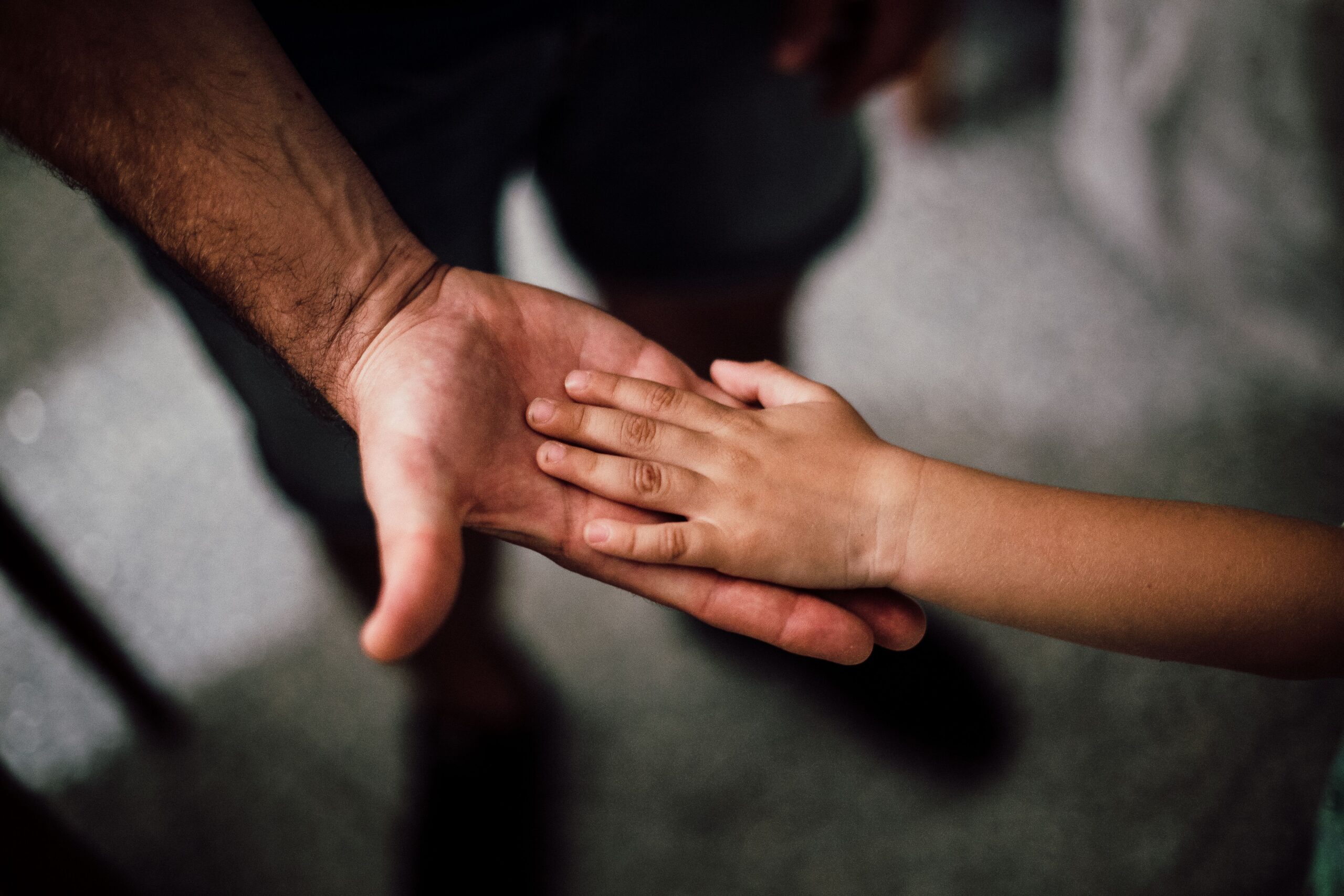
The erosion of the two-parent household has become one of the most consequential social transformations in contemporary Australia. In addition, the father being absent has become a defining feature of childhood for a significant proportion of young Australians.
According to the Australian Bureau of Statistics, more than 1.1 million children aged 0–17 were living with only one biological parent in 2019, and nearly one quarter of these children saw their non-resident parent, typically the father, less than once per year or never.
This demographic shift is not merely a private family matter; it is a structural transformation with profound implications for social stability, youth development and public safety.
Father Absence and Developmental Risk
A substantial body of research demonstrates that father absence is associated with a range of negative psychosocial outcomes. Young people who grow up without a father report higher rates of substance use, school misconduct, anti-social behaviour, and early home leaving, as documented in qualitative studies of father-absent youth in regional Western Australia.
These findings align with broader developmental research showing that secure attachment relationships in early childhood, relationships in which fathers play a critical role, are foundational for emotional regulation, social competence and behavioural stability. Children who lack such relationships are more likely to exhibit internalising and externalising behavioural problems, including aggression, anxiety and impaired self-control.
The mechanisms underlying these outcomes are multifaceted. Father absence often coincides with other destabilising factors such as family violence, socioeconomic disadvantage, parental mental illness, and community fragmentation.
Middle adolescence, in particular, is a period in which instability can trigger significant behavioural escalation, including delinquency and violent conduct. The cumulative effect is a developmental environment in which young people lack consistent guidance, emotional containment, and the modelling of prosocial behaviour.
The Social Consequences of Fatherlessness
The rise of fatherless households has not occurred in isolation; it has unfolded alongside increasing youth violence and social unrest in many Western nations, including Australia.
The recent killing of Joshua Smith, a 36-year-old father of three from Sydney’s west, allegedly by a 13-year-old boy, illustrates the tragic convergence of youth alienation, impulsive violence and community vulnerability. Smith was stabbed twice while assisting a group of young people stranded near Mount Druitt Westfield. The attack, reportedly witnessed by twelve youths, underscores the extent to which violence has become embedded in the everyday landscape of adolescence.
While no single incident can be simplistically attributed to father absence, the broader pattern is difficult to ignore. Research consistently shows that sole-parent families, primarily households headed by women, experience significant social and economic disadvantage, and that this disadvantage has worsened over the past 25–30 years.
These families face higher caring demands, more health issues, and greater barriers to employment, all of which compound stress and reduce the capacity for effective parental supervision. When fathers are absent, children lose not only a parent but also a stabilising force that contributes to behavioural regulation, identity formation and social belonging.
Fatherlessness as a Public Crisis.
Modern societies have normalised fatherlessness, treating it as a private inconvenience rather than a public emergency. This cultural minimisation obscures the reality that father absence is a structural driver of social disorder. As fatherless boys seek belonging, many gravitate toward peer groups that reward aggression, defiance and anti-social behaviour. The rise of youth gangs is not a mystery; it is a predictable response to a civilisation that has displaced fathers from the centre of family life and left millions of boys to raise themselves.
The consequences extend beyond crime statistics. Father absence contributes to deteriorating mental health, diminished educational attainment and weakened community cohesion. Sole-parent families are among the most disadvantaged groups in Australia, and their well-being has declined significantly over recent decades.
Policy reforms in the 2000s, particularly welfare-to-work measures, appear to have exacerbated this disadvantage, lengthening the recovery time for parents transitioning into sole parenthood. Although recent amendments have expanded financial assistance, the structural challenges remain profound.
Conclusion: Re-centring Fathers into Social Policy
Fatherless households are not an inevitable by-product of modernity; they are the predictable outcome of policy frameworks, cultural narratives, and institutional practices that have progressively eroded the social, legal, and symbolic authority of fathers.
Contemporary Australia, like many Western nations, has normalised paternal absence to such an extent that it is now treated as a routine feature of family life rather than a profound social rupture. This normalisation has occurred despite a substantial body of research demonstrating that father involvement is indispensable to child development, community cohesion, and national stability.
When fathers are absent, children are deprived of a critical source of guidance, behavioural regulation and emotional security. The consequences extend beyond the private sphere. Communities lose a stabilising influence, and societies inherit the downstream effects in the form of youth violence, deteriorating mental health, and escalating social fragmentation. Fatherlessness is therefore not merely a familial concern; it is a structural and civic crisis.
A generation ago, children in Australia could reasonably expect to grow up with their fathers present and engaged. Today, the opposite can be expected. This demographic reversal represents one of the most consequential social transformations of the late twentieth and early twenty-first centuries. Its effects are visible in rising youth crime rates, declining self-control among adolescents, and the emergence of cohorts of young people who lack the moral architecture traditionally provided by paternal involvement.
These outcomes are not accidental. They are the predictable consequences of institutional environments that fail to recognise father presence as a cornerstone of public well-being. Addressing fatherlessness requires more than moral exhortation or nostalgic appeals to traditional family structures. It demands a comprehensive national agenda.
Without decisive intervention, Australia and other Western nations will continue to witness the spiralling consequences of a generation raised without the fathers they urgently need. The preservation of social stability, public safety, and inter-generational well-being depends on recognising father presence not as an optional familial preference, but as a foundational pillar of national resilience.
___
Image courtesy of Pexels.

Related News

Dr Alex George has shared a heartfelt post in honour of his dad, Anthony, to mark International Men’s Day. The TV star, 30 years old, took to Instagram to mark the occasion and also urged his followers to check in on their male friends’ mental health. Alongside a selfie of himself with his retired police officer father, Alex wrote: “I am super proud of you Dad, you are always there for ...
Warwick Marsh

As I looked down the road into the sun, I saw the silhouettes of a man and a woman walking side by side. The man held a young two year old boy in his arms. The young boy reached and called out for his Mummy. Maybe I got it wrong though, because the next moment, when I looked again, I saw the young boy in his mother’s arms reaching out and ...
Warwick Marsh
News
Dads4Kids News is for writers to share insights, stories, the latest research and news to encourage dads and their families.
Most Read
The opinions of our writers are not necessarily the opinion of Dads4Kids. Please do your own research and come to your own conclusions. We welcome feedback and if you would like to submit an article to Dads4Kids, please contact the editor at info@dads4kids.org.au