The culture of your family will be based on 3 things:
- What you allow
- What you don’t allow
- What you demonstrate/how you live your life
I know what you’re thinking: that is way too simple, and way too obvious. Yes! Just the way I like things. At least when things are simple, I can pretend to understand most of them.
Although these 3 elements are simple and seem obvious, the number of people who take the time to think about them in relation to their family culture and the long-term effects is very low.
In this blog, we’re going to deal with what you allow, and what you don’t allow. In the next blog, we’ll deal with what you demonstrate/how you live your life.
But I like the easy option
When dealing with kids, it’s much easier to let things go. You know, pretend they didn’t happen. After all, we’re incredibly busy and it probably hasn’t done any harm anyway.
One of my biggest personal mistakes in parenting was not taking action because the behaviour didn’t seem that bad. When you have a child that is easygoing and always happy, it can be even more difficult to discipline them. This is especially true when you’ve had one child that is anything but easy.
Without trying to make this too personal, may I suggest you don’t do what I did early on: allowing what seems very innocent, allowing “not too bad” behaviour to go on.
Letting things go because we’re too busy or too tired to do anything about it, does 2 things:
- Creates a whole lot of extra discipline, disappointment and instruction that will have to take place later on. As much as we’d like to, we can’t avoid it.
- Says to that child and the rest of the household that that particular behaviour is OK. Simply because we’re not doing anything about it. When I say not doing anything about it, this also includes talking over and over (nagging) the child, but not actually taking any action to follow through.
Every child goes through it, and some seem to take it further than others. However, the sooner we deal with it, the better it is for everyone, and I do mean EVERYONE.
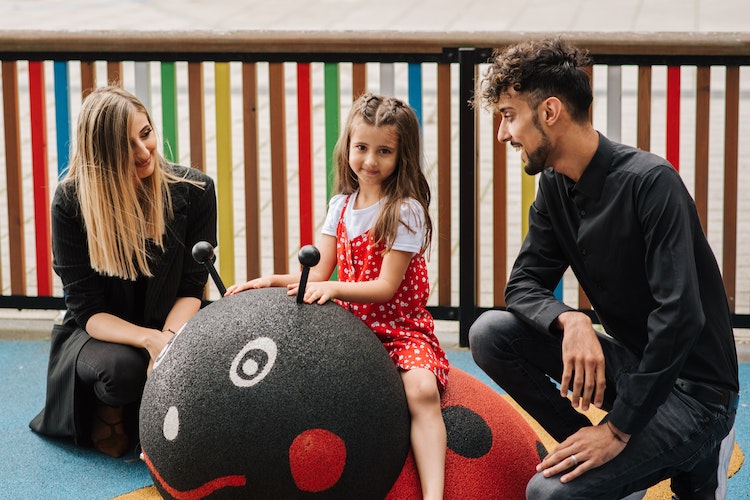
If one of the values in your family is respect, how our kids speak to their parents is a great place to start.
By not allowing children to talk rudely, or yell at their parents, you are teaching them respect. Because you are an authority figure, you are also teaching them to respect authority and leaders. This then, by default, becomes part of your culture.
That’s not to say that we agree with everything that every leader says, or believes; however, we do need to respect the person and their position.
What has politics got to do with it?
Quite often, politicians do not have a lot of respect from their constituents. This is partly because they don’t show respect for each other, which shows little respect for themselves and their political party. This in turn demonstrates a lack of respect for people in general.
OK, maybe we’re getting a bit philosophical. However, you can see how a seemingly minor home culture/value, can actually have major repercussions later in life.
Remember, we are here not simply to teach kids right and wrong, but to build character, instil integrity and train leaders.
What will you allow in your home?
What won’t you allow in your home?
___
Originally published at Mum Daily. Photo by Anete Lusina.

Related News

‘Healthy Dads – Healthy Kids’ rolls off the tongue pretty easily. It almost replicates the saying, “He/she’s a chip off the old block”. Researcher Jessica Ball released a research paper for the Public Health Agency of Canada, showing that ‘involved dads’ results in children following positive health outcomes such as the following: enhanced self confidence fewer accidental and premature deaths less substance abuse less distress greater wellbeing marital stability/happiness less hospital ...
Warwick Marsh

Happy Mother’s Day! James E Faust said, “The influence of a mother in the lives of her children is beyond calculation.” Film star Leonardo DiCaprio said, “My mother is a walking miracle.” Did you know the word “mother” is the most beautiful word in the English language? A British Council survey of 40,000 people in 102 non-English-speaking countries has put the word at the top of a 70-strong list. Last year ...
Warwick Marsh
News
Dads4Kids News is for writers to share insights, stories, the latest research and news to encourage dads and their families.
Most Read
The opinions of our writers are not necessarily the opinion of Dads4Kids. Please do your own research and come to your own conclusions. We welcome feedback and if you would like to submit an article to Dads4Kids, please contact the editor at info@dads4kids.org.au